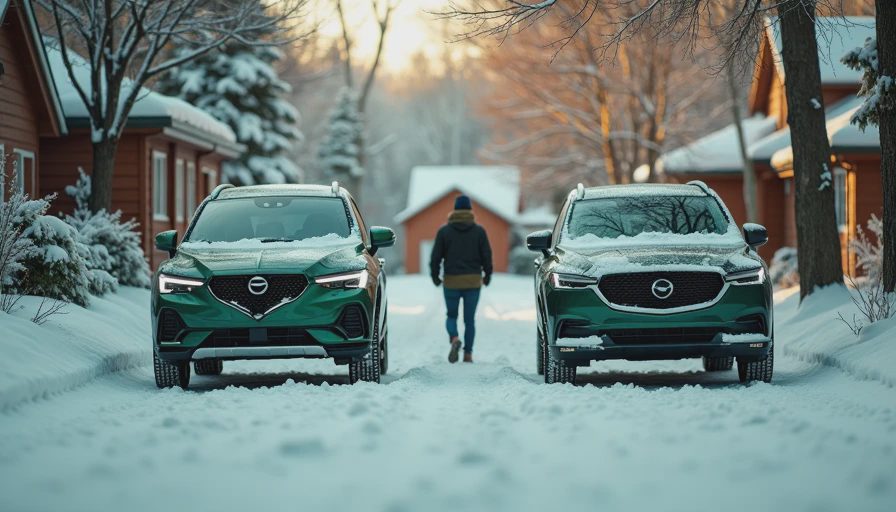
If you're shopping for a car or SUV right now, you've probably seen the same question over and over: AWD vs FWD. Every car site, every YouTube video, every dealer ad shoves the all-wheel-drive badge in your face like it's the only way to stay safe. But here's the truth from someone who spent years watching people overpay for drivetrains they didn't need: most of you don't need AWD. And paying for it when you don't need it is one of the easiest ways to burn money on a car.
Let me break down the real differences, the costs, and when each actually makes sense.
The Cost Difference Is Real
The first thing to understand is that AWD adds weight, complexity, and upfront cost. On a typical midsize SUV like the Honda CR-V or Toyota RAV4, going from FWD to AWD adds anywhere from $1,500 to $2,500 to the sticker. That's real money. And that's before you factor in the extra fuel consumption. The EPA estimates AWD versions typically lose 1 to 3 MPG compared to their FWD counterparts. Over five years of driving 12,000 miles a year, that extra fuel burn can easily add another $500 to $1,000 depending on gas prices. The debate of AWD vs FWD often centers on that upfront premium.
But the cost doesn't stop at the pump. The extra hardware – a transfer case, a rear differential, half-shafts – means more things that can break. When those parts fail, the repair bills are not cheap. A rear differential replacement on a popular SUV can run you $1,500 to $2,500 at a shop. Front-wheel-drive cars have none of that. So when you think about AWD vs FWD long-term, the maintenance advantage goes to FWD.
So the simple math: if you buy FWD, you save $1,500-$2,500 upfront, save on gas, and avoid expensive potential repairs. For many drivers, that's a no-brainer.
Fuel Economy: AWD Slurps More Gas
Let's dig deeper into the fuel economy hit. The extra rotating mass and friction of an AWD system rob power and efficiency. For example, the 2024 Honda CR-V with FWD gets 28 city / 34 highway MPG. The AWD version drops to 27 city / 32 highway. That difference may not seem huge, but over 60,000 miles, it's about $250 extra in fuel at current prices. Multiply that by higher gas prices or more miles, and the gap widens. In the AWD vs FWD decision, fuel cost is a tiebreaker if you drive a lot.
When AWD Actually Matters
Now, I'm not saying AWD is a scam. There are legit reasons to choose it. If you live in a place that gets serious snow (think Buffalo, Denver, northern Michigan) and you have to drive on unplowed roads regularly, AWD can help you get moving. It also helps with wet traction if you're in a region with heavy rain. And if you do any light off-roading – dirt roads, forest service roads – the extra traction is nice to have.
But here's the key: AWD helps you go, not stop. It does nothing for braking or cornering on ice. That's all down to tires. I've seen too many people in AWD SUVs with all-season tires slide right through intersections because they thought AWD made them invincible. It doesn't. The real safety benefit comes from proper tires, regardless of whether you choose AWD or FWD.
For the vast majority of drivers in the Sun Belt, the Midwest (where roads get plowed quickly), or the East Coast, a good set of all-season or winter tires on a FWD car will get you through 95% of winter weather. And it will do it cheaper. When you weigh AWD vs FWD for your climate, be honest about how many days you actually need that extra traction.
Maintenance and Longevity
Let's talk about what happens after five years. A FWD car has simpler drivetrain maintenance – you worry about front half-shafts and that's about it. AWD adds fluid changes for the rear differential and transfer case, plus potential issues with the coupling system that engages the rear wheels. Many modern AWD systems use an electronically controlled clutch pack that can wear out, especially if you drive hard or if the system engages frequently. Replacement cost? Often $1,000 or more. In the AWD vs FWD longevity comparison, simpler always wins.
Resale value is another angle. Yes, AWD often commands a premium on the used market, especially in snowy regions. But that premium rarely matches the extra initial cost and maintenance. You might get back $1,000 more on resale after five years, but you spent $2,000 extra upfront. Net loss.

My Recommendation
Here's the decision framework I use when people ask me about AWD vs FWD:
- If you live in the Snow Belt (Northeast, Upper Midwest, Mountain West) AND you drive on unplowed roads regularly, get AWD. But pair it with dedicated winter tires for maximum safety.
- If you live anywhere else, save your money and get FWD. Use the savings for good tires, which matter more than any drivetrain.
- If you're buying a used car, FWD is often the better value because you avoid the complexity of an older AWD system that might be on its last legs.
Bottom line: AWD is a feature that sounds impressive in a sales pitch, but for most families, FWD is the smart, honest choice. Don't let a dealer upsell you into something you don't need. The AWD vs FWD decision really comes down to climate and honesty about your driving conditions.
Now get out there and find a deal that makes sense. And if it sounds too clean, look for where they buried the dirt.