
I've spent years on both sides of the used-car desk—selling new cars and appraising trade-ins. One thing I learned fast: the lower control arm is a piece of hardware most buyers never think about until the shop hands over a $1,200 estimate. If you're shopping for a used car, knowing what a worn lower control arm looks like and what it costs to fix can save you real money. Not just in repair bills, but in negotiating power when you spot one before the dealer does.
Why the Lower Control Arm Matters
The lower control arm connects the wheel hub to the frame and lets the suspension move up and down while keeping the tire planted. It's a critical part of steering and ride quality. When the bushings wear out or the arm itself gets bent, you'll feel it in the steering wheel—usually a clunk over bumps, wandering on the highway, or uneven tire wear. For a family car, that's not just annoying; it's a safety issue. Replacements aren't cheap either: expect $300 to $800 per side for parts and labor, depending on the vehicle.

How to Spot a Bad Lower Control Arm During a Test Drive
You don't need to be a mechanic to catch this. Drive the car over a rough patch of road or a speed bump. Listen for a deep thud or clunk from the front end. Then find an empty parking lot and do a slow, tight circle. If you hear a clicking or popping noise, that's another giveaway. Also, look at the front tires: if the inner edges are worn more than the outer, it could be from a misaligned suspension caused by a bad lower control arm. The bushings themselves can be checked visually—if the rubber is cracked, dry, or pushed out of place, the arm is on its way out.
The Negotiation Angle
A car with a worn lower control arm isn't junk—it just needs maintenance. But that maintenance is a known cost. If you find one during inspection, you have leverage. I've seen dealers knock $500 off the price just to avoid putting the car on a lift. My advice: get a written estimate from your own mechanic or a chain like Firestone, then ask for that amount off the asking price. If the dealer balks, walk. There are plenty of other cars on the lot that don't need suspension work right away.
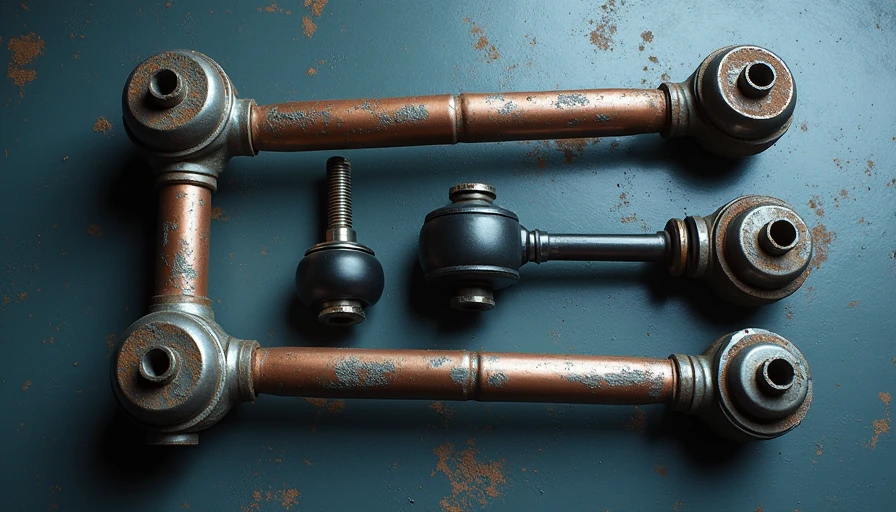
Common Vehicles with Frequent Lower Control Arm Issues
Some models eat lower control arms faster than others. In my time appraising trades, I saw it a lot on Honda CR-Vs and Toyota Camrys from the early 2000s. The bushings are known to wear around 80,000 miles. Ford F-150s from the 2010s also have a reputation for premature lower control arm bushing failure, especially if they've been off-road. On the luxury side, BMW 3-series models with high miles often need both control arms around 60,000 miles. If you're looking at any of these, factor that into your budget.
Frequently Asked Questions About Lower Control Arm Replacement
When you're used-car shopping, knowledge about the lower control arm can give you an edge. Here are answers to common questions buyers ask.
**How much does a replacement cost?**
Expect $300–$800 per side for most vehicles, including parts and labor. For luxury models like a BMW 3-series, the price can exceed $1,000. Always get a written estimate from a trusted shop.
**Can I still drive with a worn control arm?**
Yes, but it's not recommended. The suspension will feel loose, and you risk accelerated tire wear and reduced handling. If you hear clunking, plan to replace it soon.
**Does a bad control arm affect alignment?**
Definitely. A worn arm causes the alignment to shift, leading to pulling and uneven tire wear. That's why a test drive on rough roads is essential.
**Should I replace both sides at once?**
Most mechanics recommend it because the other side has similar wear. Replacing both ensures balanced performance and saves on labor in the long run.
**Can I use this as a negotiating tool?**
Absolutely. Get a pre-purchase inspection and ask the dealer to deduct the estimated cost. I've seen buyers get $400–$700 off by simply showing the quote.
**Real-world example:** A friend was looking at a 2012 Honda CR-V with 90,000 miles. During the test drive, he heard a clunk from the front. He took it to a Firestone for a free alignment check, and they confirmed the bushings were shot. He showed the $550 estimate to the dealer, who knocked $600 off the price. That's a win—he used the problem to his advantage.
**What else should I check if the control arm is bad?**
Often, if one bushing is worn, the ball joints or tie rod ends may also need attention. Ask for a full suspension inspection to avoid surprises later.
The Bottom Line
A worn lower control arm isn't a deal-breaker, but it's a negotiation chip and a sign that the car might need other suspension work. My rule: if the car has over 70,000 miles and original control arms, plan on replacing them within a year. Use that knowledge to either get a discount or walk away. Either way, you're not getting caught with a surprise repair bill. And remember: if the deal sounds clean, look for where they buried the dirt.