The CarFax says "clean." The photos look good. The price is right.
You show up. You take a test drive. Everything feels fine.
Then six months later, you find out why that car was $2,000 cheaper than everything else on the lot.
I've seen it happen more times than I can count. Not because buyers are stupid. Because damage hides in plain sight—if you don't know what to look for.
Here's what the surface of a car tells you first. No tools required. No mechanic. Just your eyes and fifteen minutes.
Accident Cars: Where the Paint Lies
Most accident repairs are cosmetic. The car got bumped, someone fixed it, no big deal.
But some repairs are hiding structural damage. And structural damage on a unibody car means the frame is compromised. That car will never drive straight, never wear tires evenly, and might not protect you in a second crash.
What the surface tells you:
Look at the gaps between panels—hood to fender, doors to quarter panels, trunk lid to rear body. Run your finger along each gap.
Even gaps, same width top to bottom? Probably fine.
Gap narrower at the top than the bottom? That panel has been removed.
Gap wider on one side than the other? The mounting points have shifted.
Now look at the paint under direct sunlight or a bright phone light.
Orange peel texture that doesn't match adjacent panels? Respray.
Paint that's slightly duller on one door than the next? Blended repair.
Overspray on rubber seals, window trim, or weatherstripping? Someone painted something that should never have been painted.
The surface doesn't lie: If the gaps are uneven and the paint doesn't match, that car has been hit harder than a parking lot ding. Walk away unless you have a body shop quote in hand.
Flood Cars: Where Water Leaves Its Mark
Flood cars get shipped across state lines, dried out, detailed within an inch of their lives, and sold with clean titles. The smell might be gone. The problems aren't.
What the surface tells you:
Pop the hood. Look at the engine bay bolts. Any rust that doesn't look like normal surface oxidation? Walk away.
Now check the gap between the door panels and the interior carpet. Pull the carpet up at the corner—just an inch.
Sand, dried mud, or water lines on the carpet backing? Flood.
Stiff, crusty carpet that should be soft? It's been wet and dried.
Rust on the seat brackets under the front seats? Water got inside.
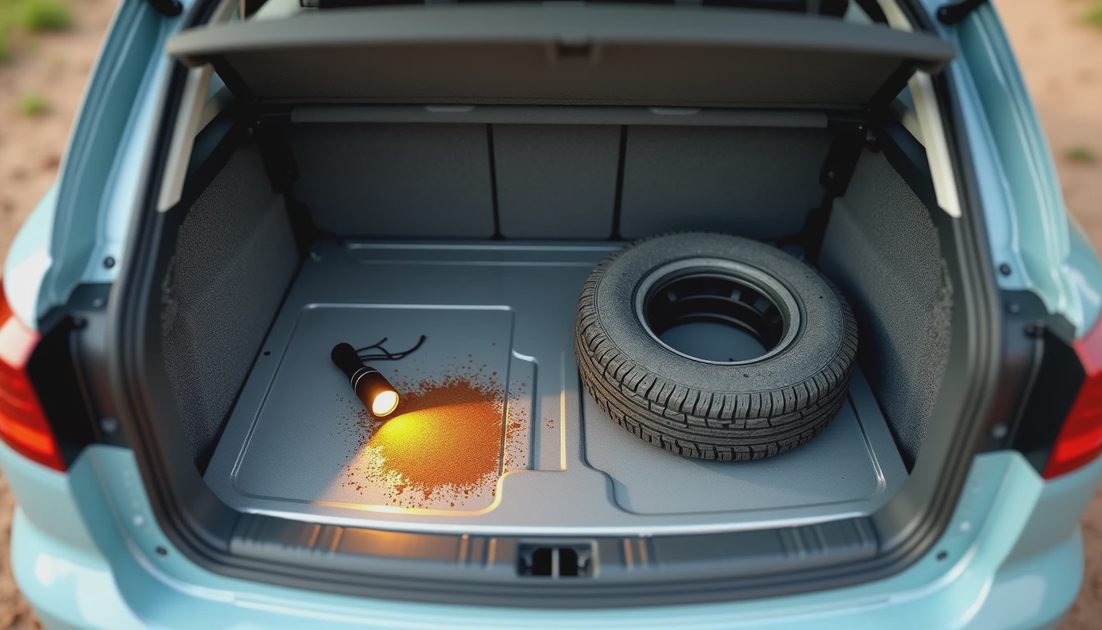
Now open the trunk. Lift the spare tire cover.
Standing water? Obviously bad.
Rust in the spare tire well? Flood or serious leak.
Dirt or debris that looks like river sediment? Someone tried to wash out the evidence.
Finally, check the seat belts. Pull them all the way out. Look for:
Water stains or discoloration
Mold spots
Stiffness or weird texture
Seat belts don't get wet in normal use. If they're stained, water got high enough to soak them.
The surface doesn't lie: Flood cars always leave evidence in the low points—spare tire well, seat brackets, carpet corners. If you see any of these signs, don't walk. Run.
Just Neglected: Where Maintenance Tells the Real Story
Some cars aren't crashed or flooded. They're just treated like garbage by someone who thought "oil change" was a suggestion.
What the surface tells you:
Look at the tires. Not just tread depth—wear patterns.
Inside edge worn more than outside? Alignment has been ignored for years.
Cupping or scalloped wear? Shocks are shot.
Mismatched brands on the same axle? Previous owner bought the cheapest tire available. That's how they treated everything.
Now check the oil. Pull the dipstick. Wipe it on a white paper towel.
Black as coffee and thick? Oil hasn't been changed on schedule.
Metallic flakes? Engine is eating itself. Hard pass.
Milky or frothy? Coolant in the oil. Head gasket failure incoming.
Now look at the brake fluid reservoir. If the fluid looks like iced tea or darker, it's never been flushed. That means every other fluid was probably ignored too.
Finally, smell the interior. Not the air freshener. The actual car.
Sour or musty smell? Water leaks or a heavy smoker.
Overwhelming "new car" spray? Someone is covering something up.
The surface doesn't lie: A car that looks okay but has bad tires, dirty oil, and dark brake fluid is a car that's been neglected. Every neglected car will cost you money within the first year of ownership. Budget an extra $1,500 for deferred maintenance—or just buy a different car.
The Bottom Line
You don't need to be a mechanic to spot the cars worth avoiding.
Uneven panel gaps and mismatched paint? Accident car.
Rust in the spare tire well or crusty carpet backing? Flood car.
Bad tires, black oil, dark brake fluid? Neglected car.
The CarFax won't tell you any of this. The dealer sure won't.
But the surface will. If you know where to look.
If the deal sounds clean, look for where they buried the dirt.